
Iberico pig farming Alabama
When we made the move south to begin Iberico pig farming in Alabama, the plan was simple enough: give our Ibérico hogs more room, more woods, a longer growing season, and build Iberico Acres around the kind of pasture-based system we had always envisioned.
What I did not expect was how quickly the pieces would begin falling into place.
The hogs certainly haven’t wasted any time.
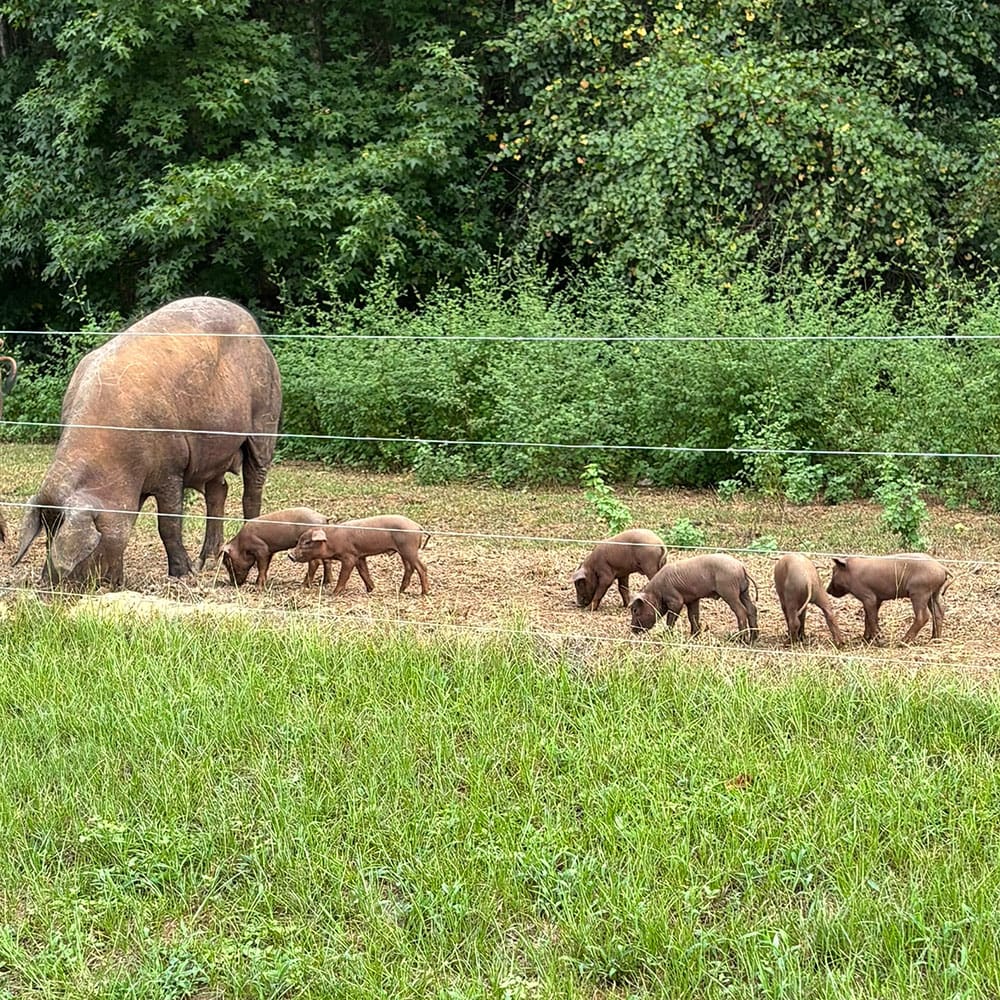
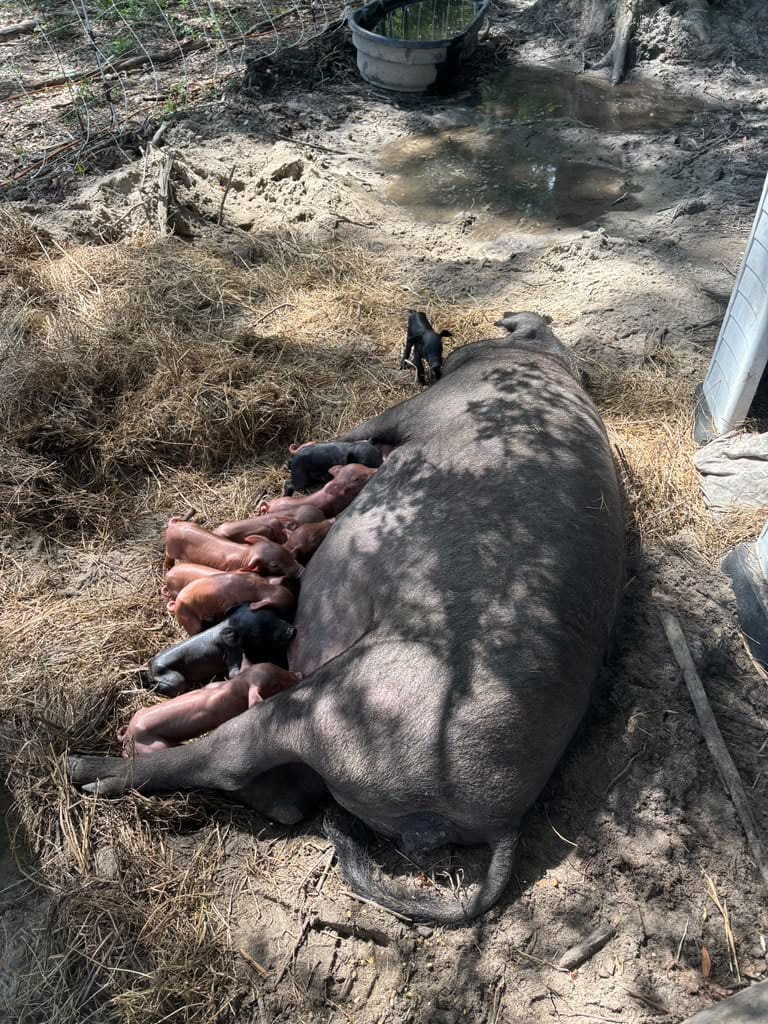
Our first litters born here in the Wiregrass are thriving. Watching piglets disappear into the woods, come tearing back out at feeding time, and grow up alongside their mothers on pasture is a pretty good reminder of why we chose this place. Two of our sows have even taken to sharing guard duty over their youngsters. Whether they’re actually nursing one another’s piglets is harder to say, but they are unquestionably raising those babies as a team.
Apparently the Wiregrass agrees with Ibérico pigs.
A Community Takes Shape
Iberico Acres isn’t alone anymore.
We now have three farms raising Ibérico hogs within roughly an hour of one another here in the Alabama–Florida Panhandle area. One of those breeders, our friend Alex down in Bonifay, Florida, called with some good news of his own: one of his sows had just delivered a litter of twelve.
Not too shabby for a breed that was never developed to compete with commercial hogs on litter size.
Something else is happening too. The network around these pigs is beginning to grow.
Finding the Right Feed — Practically in Our Backyard
A recent search for a dependable local feed source led us to Gary at McDaniel Feed. Gary is 74 years young and spent years raising hogs himself, at one time running a herd of around 500 pigs. When I told him what we were raising, he already knew what an Ibérico was—although he’d never actually seen one.
I suspect that will change.
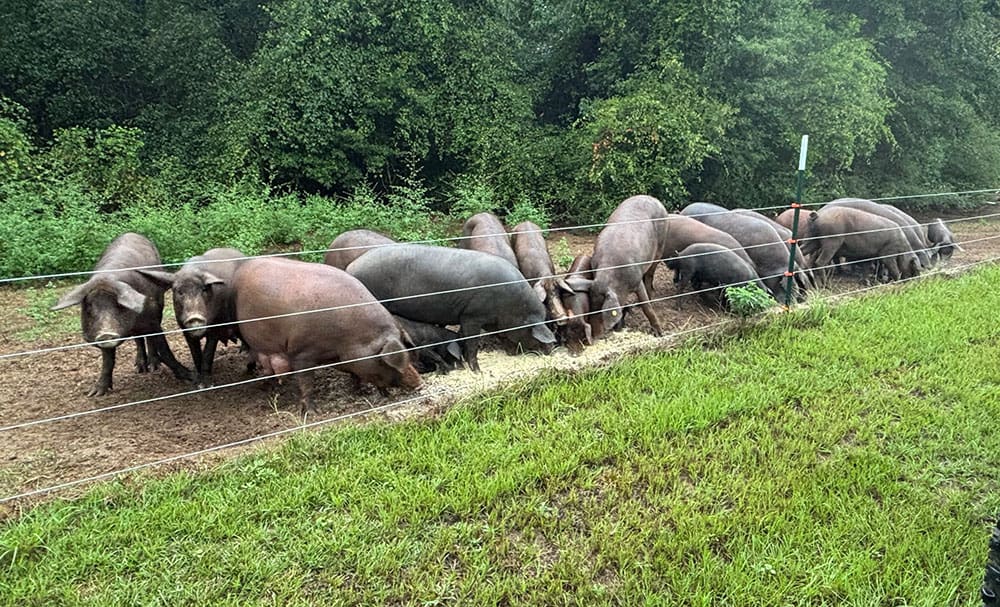
He is now mixing our bulk ration from corn, beans, probiotics and oil and loading it directly into our grain cart. After spending months looking for a dependable, unmedicated feed source that made sense geographically and economically, finding one practically in our backyard feels like another major piece of the puzzle clicking into place.
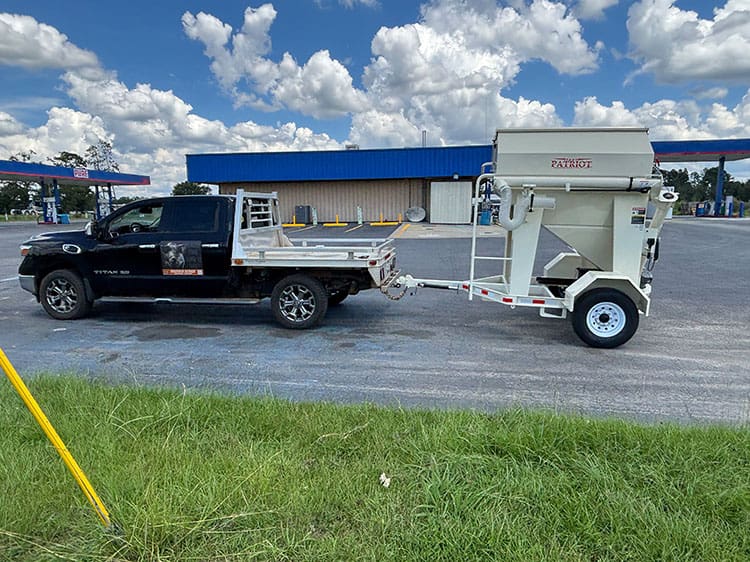
There is an old saying that membership has its privileges. In this case, the introduction came through Jerry Turner, our fence contractor. Farmers tend to know farmers, and sometimes the best solutions still come from somebody saying, “You need to call this guy.”
Meanwhile, interest in Ibérico genetics continues to spread well beyond the Wiregrass.
This week I received a call from a gentleman in Connecticut interested in purchasing a breeding package. That kind of inquiry means a great deal to us. Selling pork is one thing. Sending a group of unrelated breeding animals to establish another Ibérico herd is something altogether different. Every successful new herd helps preserve and expand these genetics in the United States.
That’s always been part of the mission.
From Pasture to Table
At the same time, our first Wiregrass hogs are beginning to make their way toward the table. Two are scheduled for processing this month for a chef customer who specifically sought out whole Ibérico carcasses. That’s the other half of what we’re building here: connecting chefs and serious food people directly with animals raised slowly, outdoors, and with purpose.
The infrastructure is catching up as well. Feed bins, paddocks, lanes, processing logistics, freezers and countless other little projects have occupied nearly every day since the move. None of it is particularly glamorous, but that’s farming. Most progress arrives wearing work boots.
What We’re Building
A few months ago, the Wiregrass was simply our new home.
Now the pigs are farrowing, the pastures are working, local relationships are forming, customers are calling, and a small community of Ibérico producers is taking shape around us.
We’re putting down roots.
And so are the pigs.